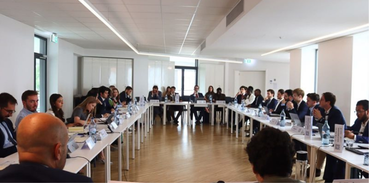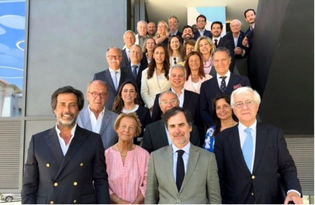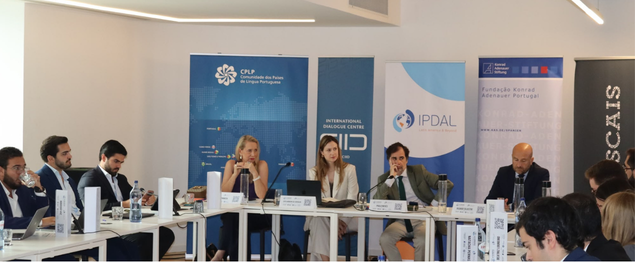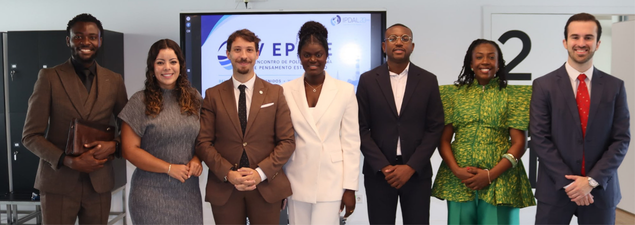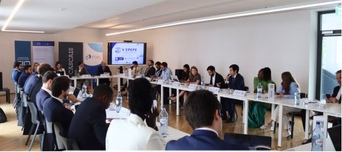


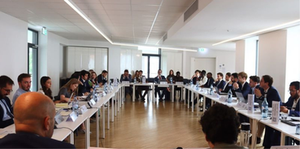
The Institute for the Promotion of Latin America and the Caribbean (IPDAL) held the fifth edition of the Foreign Policy and Strategic Thinking Meeting (EPEPE) on 10 and 11 July 2026, at the Estoril Academy of Arts, under the themes “Democracy Under Pressure” and “Portugal on the United Nations Security Council”. The event brought together experts, institutional representatives, and young participants for a joint reflection on the main challenges facing the international order, the future of multilateralism, and the resilience of democratic systems.
Against an international backdrop marked by intensifying geopolitical tensions, persistent armed conflicts, and growing pressure on multilateral institutions, the first day of the event was dedicated to the Strategic Voices Forum, which provided a platform for dialogue and the exchange of perspectives on contemporary challenges in foreign policy and democracy.
As part of the discussion on Portugal’s role on the United Nations Security Council, participants reflected on the country’s strategic positioning, highlighting the importance of diplomatic credibility, multilateral experience, and the ability to engage with different regions. Discussions addressed priority areas for Portuguese foreign policy, including conflict prevention, maritime security, the protection of critical infrastructure, and the strengthening of cooperation with Africa, the Community of Portuguese Language Countries (CPLP), and Latin America and the Caribbean.
Portugal’s potential to serve as a bridge between different geographical and political regions was also emphasised, highlighting its Atlantic position and its ability to promote dialogue and consensus-building in an increasingly fragmented international system. The need to strengthen the effectiveness and representativeness of multilateral institutions was another central topic of discussion.
The second thematic pillar, “Democracy Under Pressure”, focused on the challenges facing democratic systems, with particular attention to political polarisation, declining trust in institutions, social inequalities, and the impact of emerging technologies. The discussions highlighted the importance of bringing institutions closer to citizens, strengthening the responsiveness of public policies, and promoting more inclusive civic participation.
Digital transformation, disinformation, and artificial intelligence also featured prominently, prompting reflections on the need to invest in media and digital literacy, critical thinking, and the adaptation of institutions to emerging technological challenges.
The second day of the V EPEPE was dedicated to younger generations through the Emerging Voices & Triangular Youth Symposium initiatives, which sought to incorporate young people’s perspectives into discussions on foreign policy, democracy, and international cooperation. This intergenerational dimension provided an opportunity to explore issues related to civic participation, education, international mobility, and the role of young people in building more inclusive and resilient societies.
In this context, two workshops supported by KAICIID – the International Dialogue Centre were also held, focusing on inclusive education and intercontinental cooperation. These sessions encouraged the identification of challenges and opportunities to strengthen dialogue and collaboration among young people from Africa, Europe, and Latin America and the Caribbean, highlighting the importance of establishing lasting cooperation networks and ensuring more meaningful participation by younger generations in decision-making processes.
The discussions held over the two days resulted in a set of strategic recommendations, subsequently compiled into a Policy Paper, outlining concrete proposals to strengthen Portuguese diplomatic action, democratic resilience, and interregional cooperation.
With its fifth edition, EPEPE further consolidated its position as a platform for strategic reflection and intergenerational dialogue, fostering informed debate on international challenges and contributing to the development of collective responses in an evolving global context.
The initiative was held in partnership with the Municipality of Cascais, the Konrad Adenauer Foundation, the Community of Portuguese Language Countries (CPLP), and the International Dialogue Centre (KAICIID).