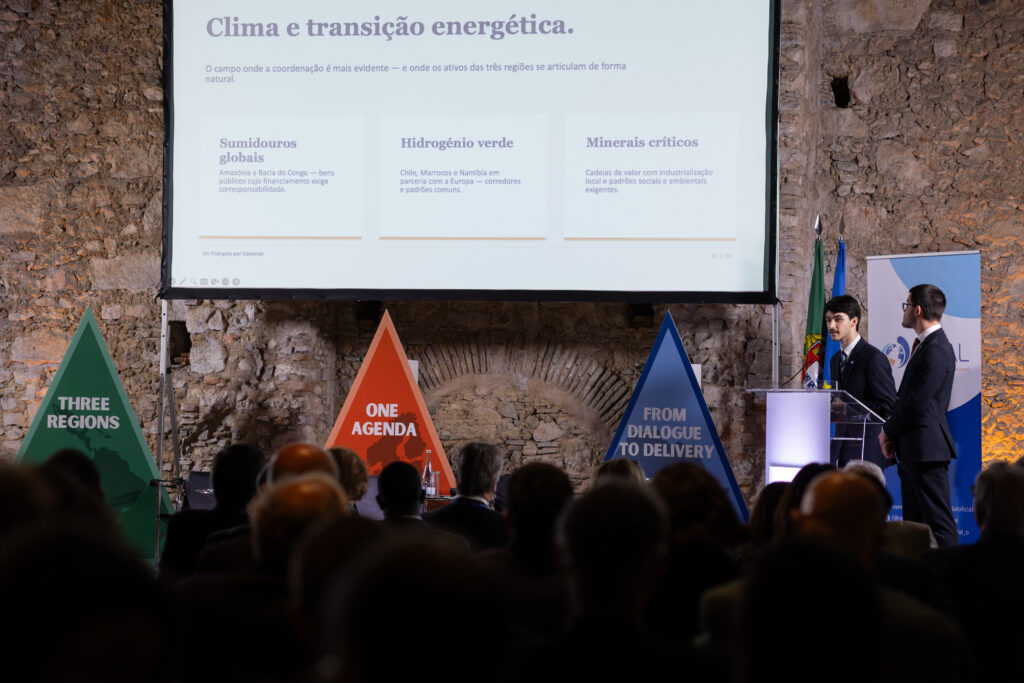


The Institute for the Promotion of Latin America and the Caribbean (IPDAL), in partnership with Konrad-Adenauer-Stiftung, presented the publication The Future of Multilateralism: From Commitment to Delivery in a Contested Multipolar Order, a study dedicated to the challenges facing multilateralism in an international context marked by strategic rivalry, political fragmentation, and the growing difficulty of transforming diplomatic commitments into concrete results.
Written by Afonso Vilan and Miguel Inácio, the publication argues that the main challenge of contemporary multilateralism is not its irrelevance, but rather its capacity for performance and adaptation. “The problem is not declining participation but declining performance,” the authors underline, in an analysis focused on the structural limitations of multilateral institutions and the need for reforms aimed at improving the effectiveness of global governance.
The publication served as the conceptual framework for the 15th Edition of the Strategic Triangle Summit: Latin America and the Caribbean – Europe – Africa, held at Teatro Thalia in Lisbon, bringing together political representatives, diplomats, academics, and international experts to discuss the future of multilateral cooperation in an increasingly complex geopolitical context.
Throughout the meeting, participants discussed topics such as the reform of international institutions, the growing fragmentation of the global order, international security challenges, digital governance, climate change, and the strategic role of relations between Europe, Africa, and Latin America and the Caribbean.
The study presented by IPDAL and Konrad-Adenauer-Stiftung contributed to framing the discussions by arguing that the multilateral system is facing a crisis of performance rather than participation. Among the main challenges identified are paralysis in decision-making processes, institutional deadlocks, deficits in representation, and difficulties in effectively implementing international commitments.
The publication also proposes concrete reforms to strengthen the effectiveness of multilateral institutions, including more flexible decision-making mechanisms, greater representation of the Global South, more transparent monitoring systems, and a commitment to “Multilateralism 2.0”, based on technological innovation and more adaptable cooperation models.
The 15th Edition of the Strategic Triangle Summit once again established itself as an international dialogue platform dedicated to fostering closer relations between the three regions, promoting strategic reflection on contemporary global challenges and on the future of international governance.